Look at the club-wide numbers and Harbour Green looks like an outlier. Look at Harbour Green alone and the club-wide numbers look like noise. Both readings are half right, and the buyer who cannot hold them at the same time will either overpay for a 6,000-square-foot estate or walk away from one that is quietly the best value in the village that year.
Harbour Green is fourteen custom estate homes inside Broken Sound Club. That is the entire village. Everything a buyer thinks they know about pricing here, whether from a portal median or a friend two villages over, is filtered through a comp set so thin that a single closing rewrites the story. That is the friction, and it starts before anyone signs a contract.
Fourteen homes, and what that does to a comp
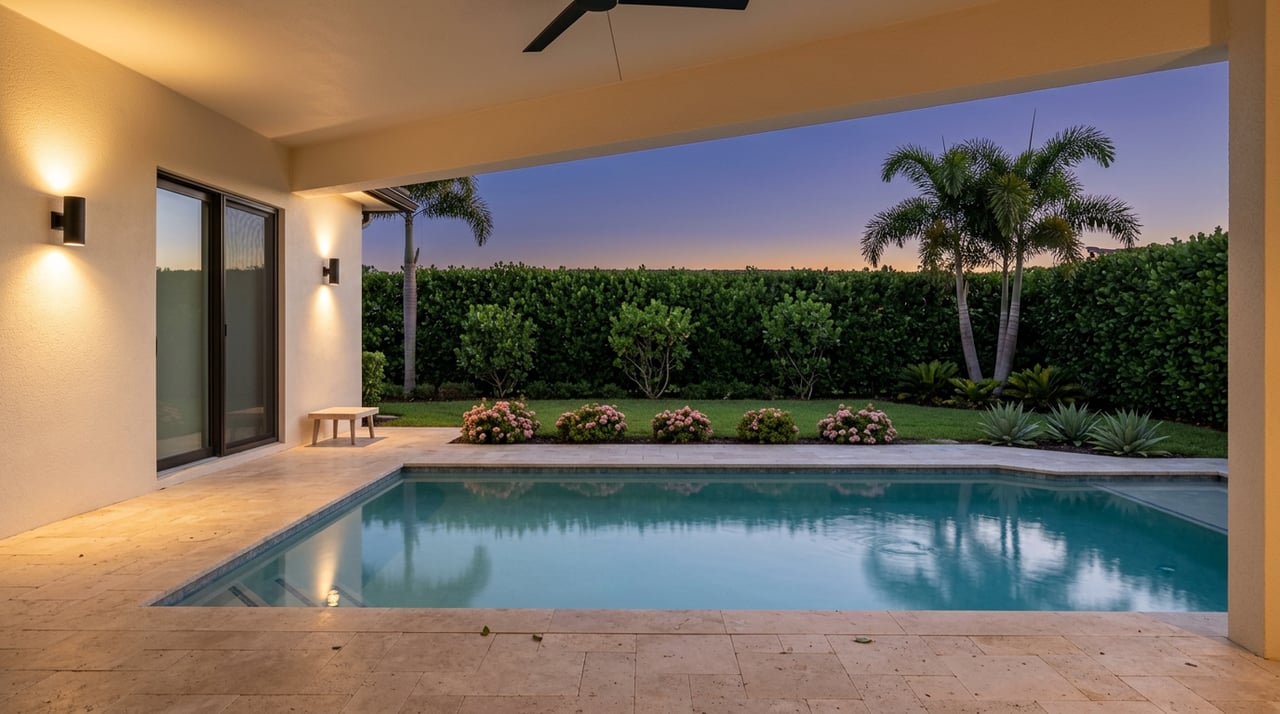
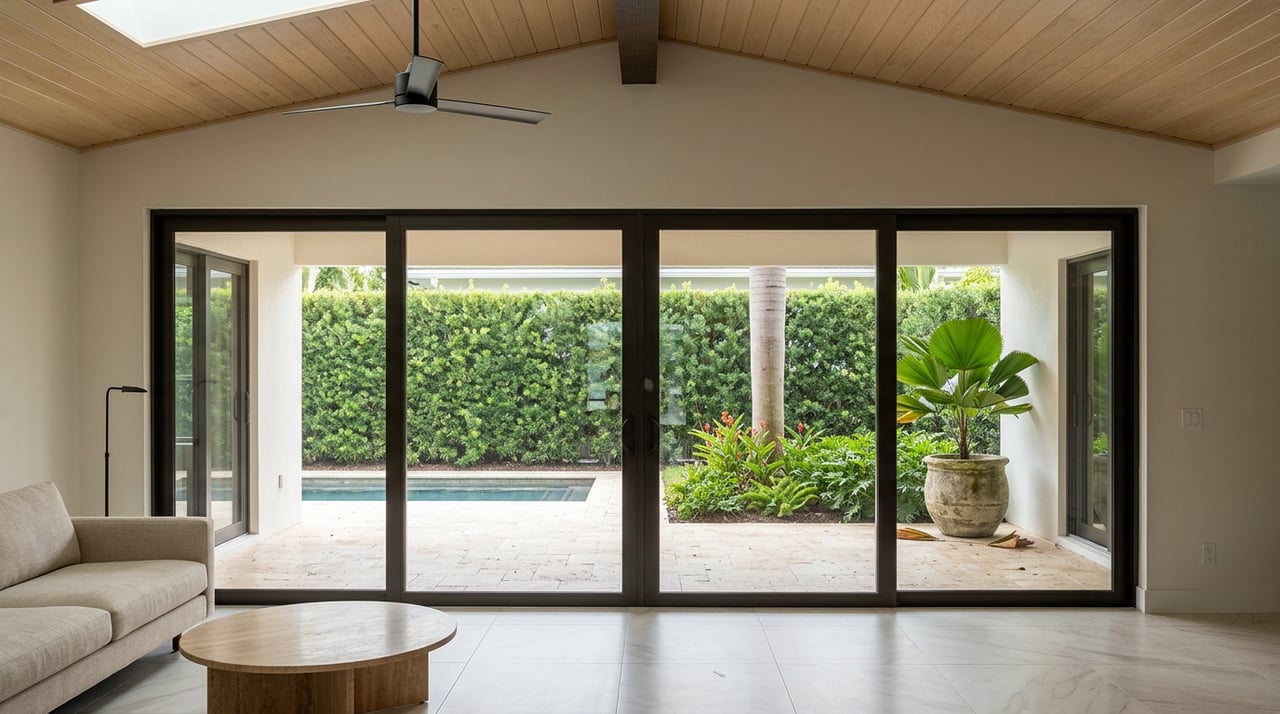
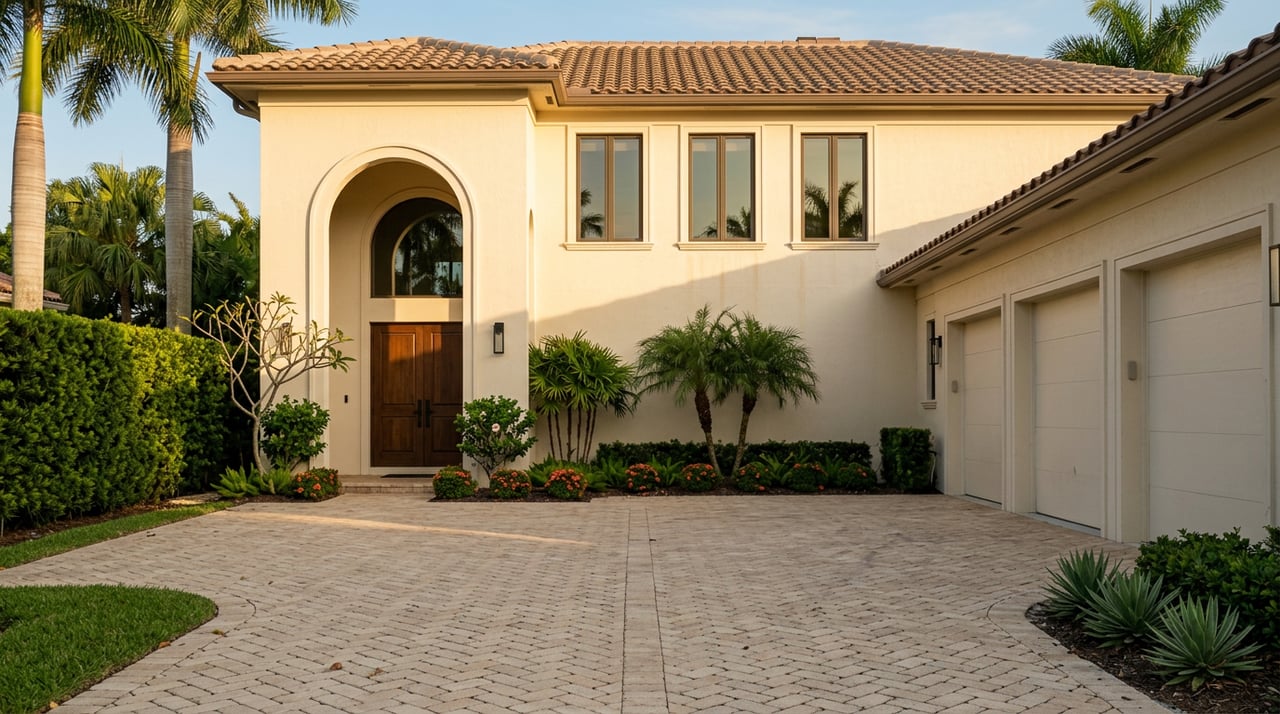
Broken Sound Club spans roughly 1,600 homes across 27 villages on 1,000 acres. Harbour Green is one of those villages. Its inventory sits at the top of the club's size range, with residences from 3,500 to 10,000 square feet on floor plans of four to seven bedrooms, all with pools, three-car garages, and either standard or courtyard configurations.
Now put that against the club-wide picture. As of July 2026 the median home price in Broken Sound is $900,000, the average sale price is $1,103,945, and houses spend 52 days on the market before being sold. Those figures describe a community that is mostly villas, townhomes, and patio homes under $1M. They tell a Harbour Green buyer almost nothing.
The more useful reference point is the broader Boca luxury benchmark. Properties are selling at 94.2 percent of list price with a median 33 days on market for well-priced homes, according to Premiere Estate Properties' 2026 report. A Harbour Green home priced to that curve should trade quickly. When one does not, the reason is almost never the market. It is the pricing, the layout, or the fact that two similar homes closed nearby in the prior year and pulled the ceiling down for whoever lists next.
That is the comp-set problem stated plainly. In a fourteen-home enclave, every recent trade counts as a benchmark, and every stale trade counts twice.
The number that sits under the price
For years, a buyer at Broken Sound could think of the initiation fee as part deposit, part sunk cost. That has changed. In a policy change effective October 1, 2025, Broken Sound eliminated all equity and refundable components from its membership, moving the club to a fully non-equity model. Broken Sound Club now operates on a non-equity membership model. Unlike equity club communities where members own a share of the club and may receive a refund of some portion of their initiation fee when they sell, all membership fees at Broken Sound Club are fully non-refundable. The club eliminated its refundable equity component, shifting entirely to a capital contribution structure.
That change matters more at Harbour Green than almost anywhere else in the club, because the membership stack is a fixed number layered onto a home purchase, and its weight relative to the transaction shrinks as the home price rises. On an $850,000 villa, the stack is a very large fraction of the deal. On a $3M Harbour Green estate, it is still real money, and it is money that does not come back at exit.
Here is what the FY2026 stack actually looks like at signing, drawn from the club's published dues schedule:
| Membership tier | One-time capital contribution | Annual operating dues | Annual capital replacement |
|---|---|---|---|
| Sports / Tennis / Social | $130,000 | $24,887 | $2,731 |
| Club Course Golf | $175,000 | $27,537 | $4,333 |
| Old Course Golf | $225,000 | $32,237 | $7,583 |
Every buyer at Broken Sound Club must join the club at closing. The minimum initiation fee is $130,000 (Sports/Tennis/Social, no golf) and is fully non-refundable. You must also pay a $4,000 Certificate of Compliance fee. A service charge of $2,400 annual is billed at $200 a month, and a renovation assessment adds $2,328 annual, billed at $194 a month. That renovation figure includes a prior $64 charge for the Pool, Bistro and Spa/Fitness center; the new club renovation adds $130, for a combined $194 a month.
For a Harbour Green household that chooses Old Course Golf, the first-year outlay outside the purchase itself sits north of $265,000 before a single property tax bill or village HOA assessment lands. That number belongs in every buyer conversation about this village. It is not hidden, it is not negotiable, and it is not a surprise once the numbers are laid out. It is, however, the single biggest reason a Harbour Green offer should look different from an offer on a comparable estate outside a mandatory-membership community.
What the clubhouse did to the estate-village math
Two years ago, the pitch for an estate village at Broken Sound was scale, privacy, and view. Today it is those things plus a very new amenity base. Broken Sound Club completed a $40 million clubhouse renovation, which delivered a 130,000 square foot facility with a two-acre resort-style poolscape, a 38,000 square foot fitness center, expanded dining including CIRQ Grille and Bar, and a culinary program led by Michelin-recognized Chef Bogdan Danila.
For a Harbour Green buyer, that renovation reprices the calculus in two directions. The upside is real: the amenity base a member is paying $32,237 in annual dues to access is measurably better than it was in 2023, and that supports pricing across every estate village. The offset is that the same amenity base is now equally available to a buyer in a 1,800-square-foot Nassau Bay or Laurel Pointe unit paying the same $130,000 baseline capital contribution. What the estate villages sell above that baseline is square footage, land, and privacy, not amenity access.
Which means Harbour Green now competes for the estate buyer on the home itself, not on the club. Compare it to the other estate options:
- Vintage Estates: 32 custom homes, 4,000 to 6,000 square feet, all with pools, golf or lake views.
- Tanglewood: 71 custom estates, 3,200 to 5,000 square feet, all with pools.
- Grand Oaks: broader estate range, with both standard and courtyard configurations, up to roughly 10,000 square feet.
- Harbour Green: 14 homes, 4,000 to 10,000 square feet on the upper end of the club's size range, all with pools, courtyard and standard plans.
Vintage Estates and Tanglewood offer depth of comps. Grand Oaks offers similar top-end scale with more turnover. Harbour Green offers the smallest, most private pool of estate inventory in the club, at the price of a comp set that is almost never fresh.
Where the leverage actually sits
For a buyer, the leverage in Harbour Green is not price. It is time, layout, and readiness to move on unlisted inventory.
- Track the village, not the club. A Harbour Green home priced against Vintage Estates or Grand Oaks comps is priced against the wrong village. Ask specifically what has closed inside the fourteen, and when.
- Courtyard vs. standard drives resale. The MLS record on recent Harbour Green offerings shows both plans trading, and the courtyard configuration with a detached guesthouse behaves differently at resale than the standard estate layout. Decide which one fits before you tour, not after.
- Price the membership tier into the offer analysis, not the offer. The $130,000, $175,000, or $225,000 decision is a lifestyle question, but it belongs on the same spreadsheet as the purchase price when you are comparing Harbour Green to a non-club luxury alternative.
- Watch for renovation vintage. Many Harbour Green residences date to the late 1980s and early 1990s. A home with a roof, impact glass, and mechanicals inside the last five years lists at a real premium to one that does not, and the gap widens when insurance renewals come around.
For a seller, the leverage runs the other way. Fourteen homes means most qualified buyers already know the village exists and are waiting. Pricing at the Boca luxury median absorption rate of 33 days is realistic when the home is genuinely ready. Pricing above the last comparable Harbour Green closing without a clear, defensible reason invites the same 96-day timelines that the ultra-luxury tier at St Andrews is currently seeing, in a village that cannot afford a stale listing.
FAQ
How often does a Harbour Green home actually come to market? With only fourteen residences, availability is episodic rather than steady. A buyer serious about the village should be in position to move within days of a listing, and should be having conversations about off-market inventory well before that.
Is the non-equity membership change a reason to look elsewhere? Not by itself. It is a reason to price the membership as a non-recoverable cost rather than a deposit. Buyers comparing Broken Sound to Woodfield, where the $38,000 equity component is refundable and the $132,000 initiation fee is not, in a member-owned club where major capital and governance decisions are made by the membership, should weigh that difference against the amenity base and the scale of the community.
What does the club-wide median tell me about Harbour Green? Very little on its own. The $900,000 July 2026 figure reflects the villa and townhome inventory that dominates the club by unit count. Harbour Green trades at multiples of that number, and its own fourteen-home history is the only reliable reference.
Are Harbour Green homes on the golf course? Most homes in the village are estate residences with private pools and courtyard or standard configurations. Specific view exposure varies by lot, and point lots have historically commanded the strongest premiums in recent MLS activity.
If you are weighing Harbour Green against Vintage Estates, Grand Oaks, or a luxury home outside the club entirely, the answer lives in the fourteen-home history, the membership tier that fits how you will actually use the club, and the specific home in front of you. That is a conversation worth having before a listing hits, not after. Susan Demerer works inside these numbers every week. Let's Connect.