Search for homes in Willow Greens and you'll land on a number that looks precise: an average sale price of $1,565,000, or roughly $402 a square foot. It reads like solid ground. It isn't.
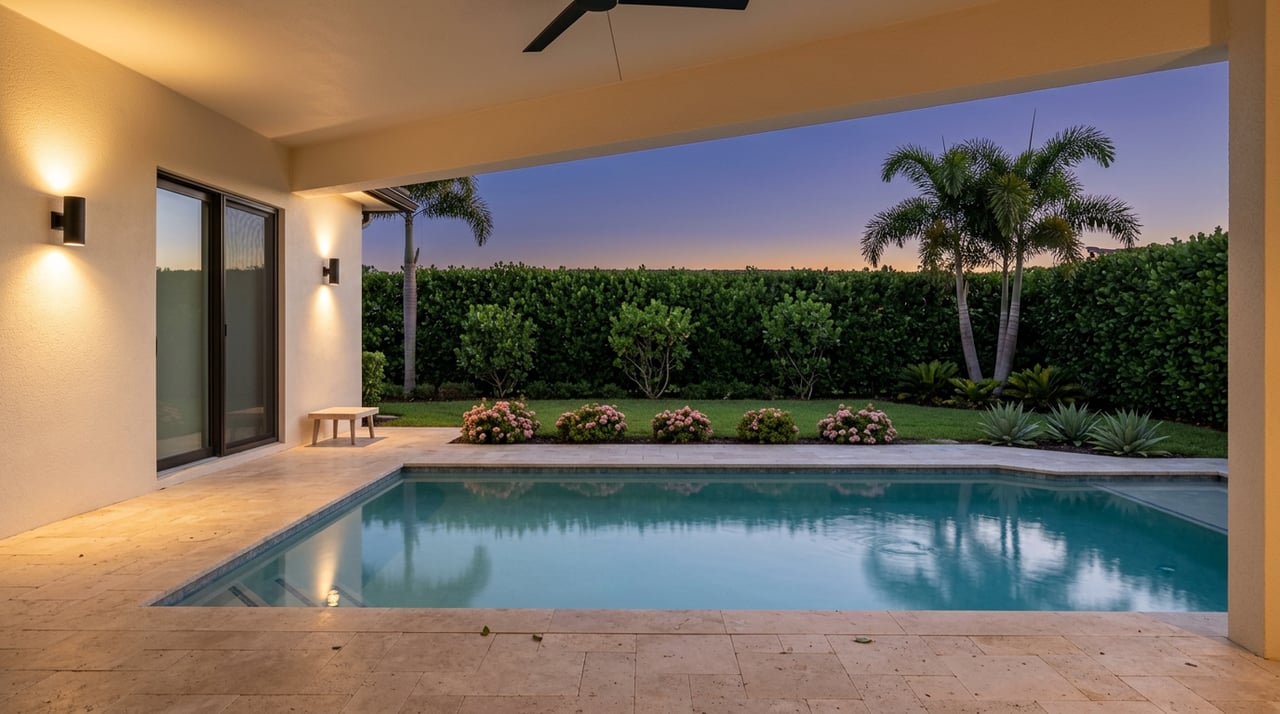
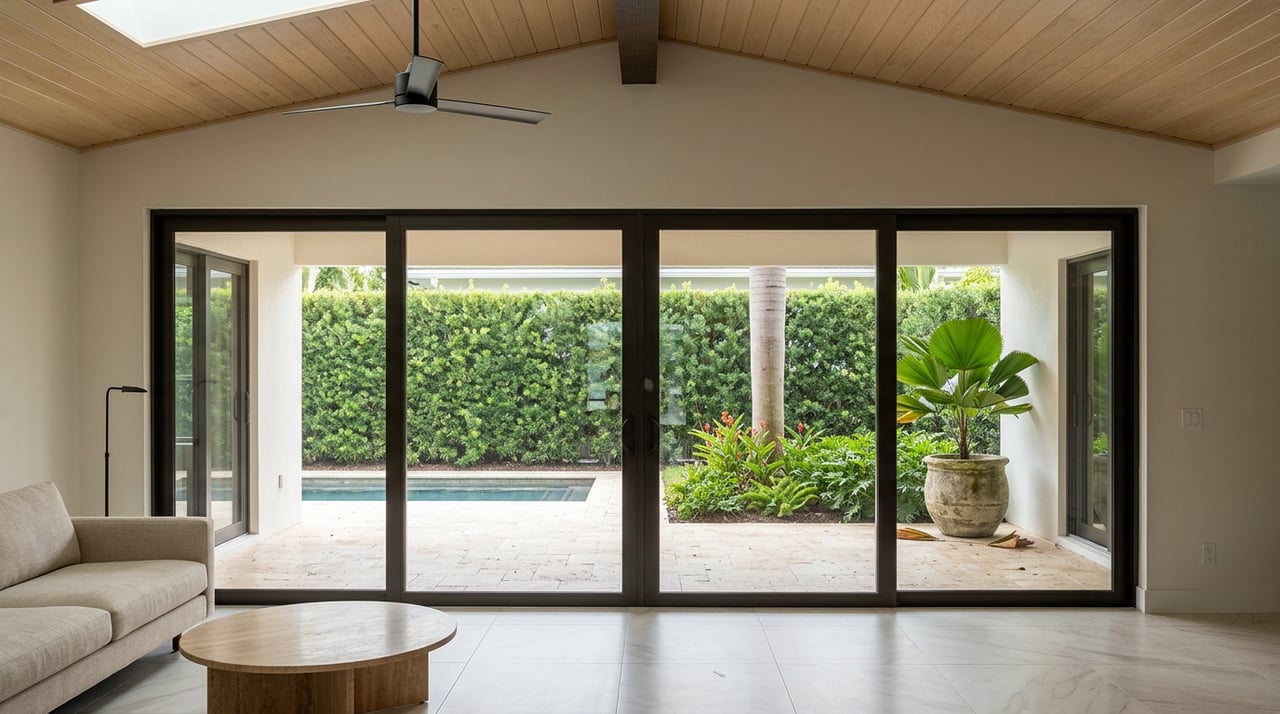
Willow Greens is a 34-home village tucked inside Broken Sound Country Club, built out in the 1980s and 1990s with CBS construction, mostly one- and two-story homes running 2,900 to 4,000 square feet, most with private pools. Do the arithmetic on that advertised figure and something worth noticing turns up: $1,565,000 divided by $402 a foot works out to just under 3,900 square feet. That's not a blended number pulled from across the village's size range. It's pinned to the largest floor plan Willow Greens has.
Thirty-four homes is not a market. It's a small, tight sample where a couple of transactions at the top of the range can swing the headline number far from what most buyers will actually pay. If you're comparing Willow Greens against other Broken Sound villages, that's the first thing to understand before you look at a single listing.
Why one number can't describe 34 houses
Average and median measure different things, and the smaller the sample, the more they can diverge. The median tells you where the middle of the pack sits. The average adds every sale together and divides by the count, which means one or two transactions at the far end of the range can drag it upward without moving the middle at all.
In a village of 34 homes built within a few years of each other, the physical differences between properties are mostly settled. Lot size, floor plan, roofline age. What varies year to year is the state of the individual home when it changes hands. A house that's been fully renovated or expanded and trades at the top of the range doesn't just sell high. In a sample this small, it can pull the whole average with it, which is most likely what's happening here: a small number of top-of-range sales sitting alongside a wider group of homes trading in the lower and middle parts of the 2,900 to 4,000 square foot range, with the average reporting a number that skews toward the biggest, most recently sold houses rather than the village as a whole.
This isn't a flaw in the data. It's what happens to any average calculated on a thin sample. The number is accurate. It's just not the number a buyer should anchor to.
The gap shows up against the whole club, too
Here's what makes the skew easier to see: measure Willow Greens against Broken Sound as a whole. Across the club's more than 1,600 homes spanning 27 villages, the median price as of July 2026 sits at $900,000, with an average of $1,103,945. Willow Greens' reported average of $1,565,000 runs about 42 percent above that club-wide average and roughly 74 percent above the club-wide median.
| Metric | Willow Greens (34 homes) | Broken Sound club-wide (1,600+ homes, July 2026) |
|---|---|---|
| Average price | $1,565,000 | $1,103,945 |
| Median price | -- | $900,000 |
| Implied size at avg price/sqft | ~3,890 sq ft | -- |
| Stated home size range | 2,900 - 4,000 sq ft | up to 10,000 sq ft in the largest estate villages |
| Price range | -- | $375,000 - $3,895,000 |
That comparison should give you pause, because Willow Greens isn't one of the club's largest-home villages. Estates in villages like Harbour Green and Grand Oaks run as large as 10,000 square feet, well beyond anything Willow Greens offers. If size alone explained the numbers, Willow Greens should trail those estate villages, not out-price the entire club's blended average by more than 40 percent. A small sample is the more believable explanation. With only a handful of transactions a year, a couple of high-end closings are enough to push the reported average above figures built on the entire 1,600-home community.
Broken Sound-wide, homes have also been spending an average of 52 days on the market as of July 2026, with prices ranging from $375,000 to $3,895,000 across the community's 27 villages. That range alone tells you the club spans everything from modest patio homes to sprawling custom estates, which is exactly why club-wide figures dilute outliers that a single small village can't.
The membership cost doesn't scale with the house
There's a second reason the average is the wrong number to anchor to, and it has nothing to do with square footage. Broken Sound membership is mandatory, and as of October 1, 2025, initiation fees run $130,000 for the Sports, Tennis, and Social tier with no golf, $175,000 for New Course Golf membership, and $225,000 for Old Course Golf membership, the most comprehensive tier. All three are fully non-refundable. On top of that, annual family dues for the base tier run $24,887 a year, and every new purchaser pays a one-time $4,000 Certificate of Compliance fee at closing. Village HOA fees are separate on top of all of that and vary by subdivision, so Willow Greens carries its own line item beyond the club stack.
None of those fees move based on whether the home you're buying costs $900,000 or $1,565,000. That's the piece the average sale price hides. A buyer closing nearer the lower end of Willow Greens' likely range is putting the same fixed six-figure membership commitment on top of a smaller purchase price, which means that fee represents a larger share of the total transaction than it would for a buyer at the top of the range. The average sale price makes the village look like it costs more across the board. In practice, the membership math is what changes the total cost picture more than the sale price itself does.
What to ask instead of trusting the average
If you're comparing Willow Greens to another village, or trying to figure out what a specific home is actually worth, the average sale price isn't a useless number. It's just the wrong starting point. A few better questions get you closer to a real answer:
- What did comparable homes in the same size band, roughly 2,900 to 3,400 square feet versus 3,500 to 4,000 square feet, actually close for in the last 12 months?
- Was the most recent high sale a full renovation or an expansion, or was it sold closer to original condition?
- How many total transactions make up the reported average? A village-level number built on three or four sales a year moves differently than one built on twenty.
- What's the price per square foot for homes in similar condition, not just similar footprint?
- Which membership tier does the price point you're targeting actually require, and what does that add to your real closing cost?
None of these questions show up in a portal's summary stat. They're the difference between a number that describes a village in the abstract and a number that describes the house you're actually about to make an offer on.
Reading the village correctly before you make an offer
Here's the version of the story that actually matters if you're deciding whether Willow Greens fits your search. It's a small, established village of well-built homes from the same construction era, with real variation in condition driving most of the price spread you'll see between listings. The average sale price tells you a top-of-range sale happened recently. It doesn't tell you what a typical Willow Greens home trades for, and in a village this size, no single published number does. That takes a walk-through, a look at recent comparable closings adjusted for size and condition, and an honest look at which membership tier you're actually buying into.
That's the kind of read that comes from tracking this community closely, not from a single stat pulled off a search result.
If you're weighing Willow Greens against another Broken Sound village or trying to make sense of a specific listing's asking price, Susan Demerer can walk you through the comps that actually apply to your search. Let's Connect.