Every Florida condo buyer in 2026 has learned to ask the same question before writing an offer: has this building done its milestone inspection, and what does the reserve study say. It is a reasonable question. Statewide, more than 1,400 Florida condo buildings currently sit on Fannie Mae's restricted list, locked out of conventional financing because of missed inspections, underfunded reserves, or pending special assessments that run from a few thousand dollars to well over $100,000 per unit. The instinct buyers have developed, understandably, is to treat a building's age as the warning sign. The older the building, the closer it sits to trouble.
That instinct misses the actual trigger. Florida's post-Surfside safety laws, the Structural Integrity Reserve Study and milestone inspection mandates that have reshaped condo buying across the state, apply only to buildings three or more habitable stories tall. Age matters inside that bracket. Outside it, age does nothing. A condo building can be well past thirty years old and still owe the state nothing under these rules, as long as it never crossed three stories.
Bridgepointe at Broken Sound is exactly that building.
What the Law Actually Triggers
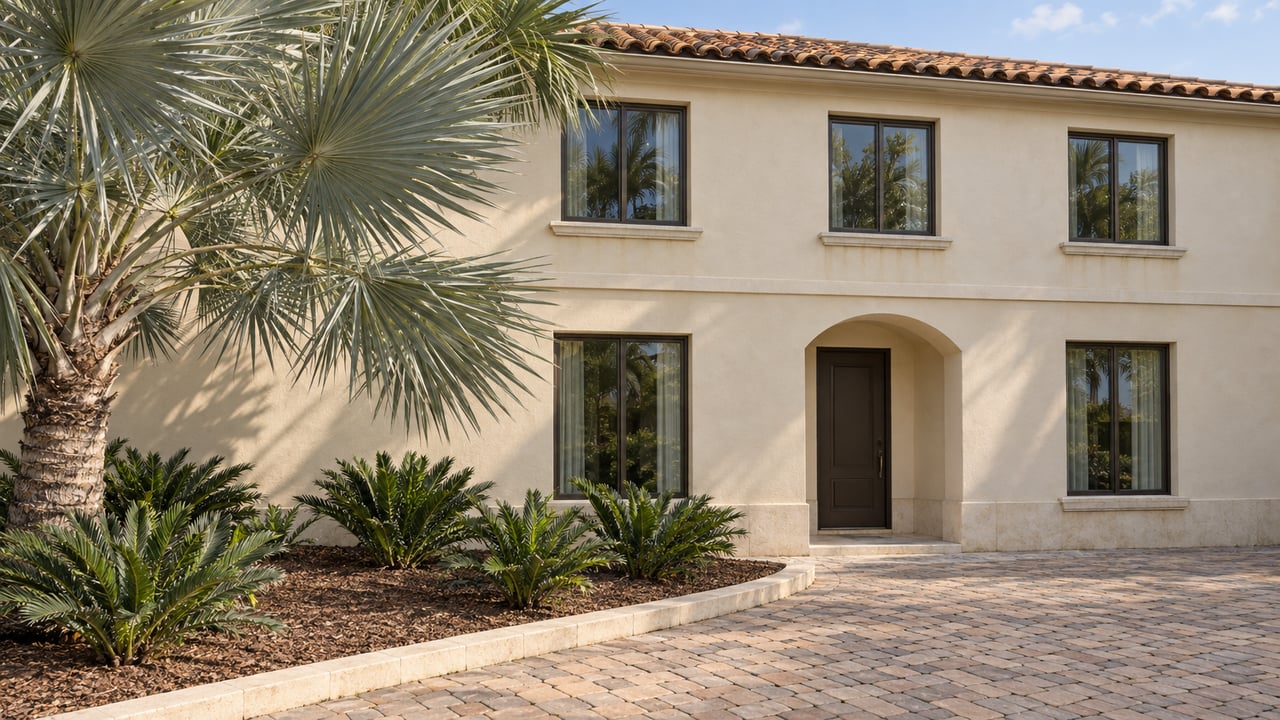
Bridgepointe is a village of 56 condominium units inside Broken Sound Country Club, arranged across fourteen two-story buildings with four units in each, two on the ground floor and two above. Building records show the structure at 2554 Coco Plum Boulevard, one of those fourteen, was completed in 1993. That puts the building at thirty-three years old in 2026, three years past the thirty-year mark that would normally force a milestone inspection.
Normally, but not here. Florida's Department of Business and Professional Regulation is explicit about where the line falls: "residential condominium associations with buildings three or more habitable stories in height" are the ones required to complete a Structural Integrity Reserve Study, and the parallel milestone inspection statute uses the same threshold. A two-story building, no matter how old, sits on the other side of that line entirely.
This is not a loophole anyone is exploiting. It is simply how the statute was written after the 2021 Champlain Towers South collapse in Surfside, and it has held through three rounds of legislative amendment since, SB 4-D in 2022, SB 154 in 2023, and HB 913 in 2025. Each revision tightened deadlines and reserve rules for the buildings the law covers. None of them lowered the story threshold.
What That Means for a Buyer Standing in a Bridgepointe Kitchen
The practical effect shows up in three places.
First, financing. Buildings that miss milestone deadlines or show underfunded reserves are the ones landing on Fannie Mae's non-warrantable list, which pushes buyers into portfolio loans or non-QM products at higher rates. Bridgepointe was never in the pool of buildings facing that specific deadline pressure, because the deadline never applied to it.
Second, reserves. Buildings covered by the SIRS mandate can no longer let owners vote to waive or underfund reserves for the eight structural components the law names, as of any budget adopted after December 31, 2024. Bridgepointe's association is not bound by that specific mandate, which means its board sets reserve policy the way Florida condo boards did before 2022, guided by its own budget process rather than a state-mandated funding schedule.
Third, and this is the part worth sitting with, the exemption does not mean the building has no maintenance obligations or no assessment history. It means the state is not the one setting the schedule. A roof still ages. Stucco still needs painting. Plumbing common to a building still needs attention. Bridgepointe's own association materials list a quarterly maintenance assessment, due the first of January, April, July, and October, which funds exactly that kind of ordinary upkeep. The two-story exemption changes who decides how aggressively to fund for the future. It does not eliminate the need to fund for it.
A buyer comparing Bridgepointe to a three-story condo elsewhere in Boca is not comparing a safe building to a risky one. Both can be perfectly sound. What differs is which one carries a state-mandated paper trail, a completed SIRS, milestone inspection reports, a documented reserve percentage, and which one runs on the association's own judgment. For a buyer trying to gauge risk before closing, that difference changes what documents exist to review. It is worth asking Bridgepointe's association for its own reserve schedule and recent assessment history even though state law does not require the association to produce a SIRS. The information a seller can voluntarily hand over is not the same as the information the state forces a building to generate, but it answers the same underlying question.
Where This Sits in Broken Sound's Price Order
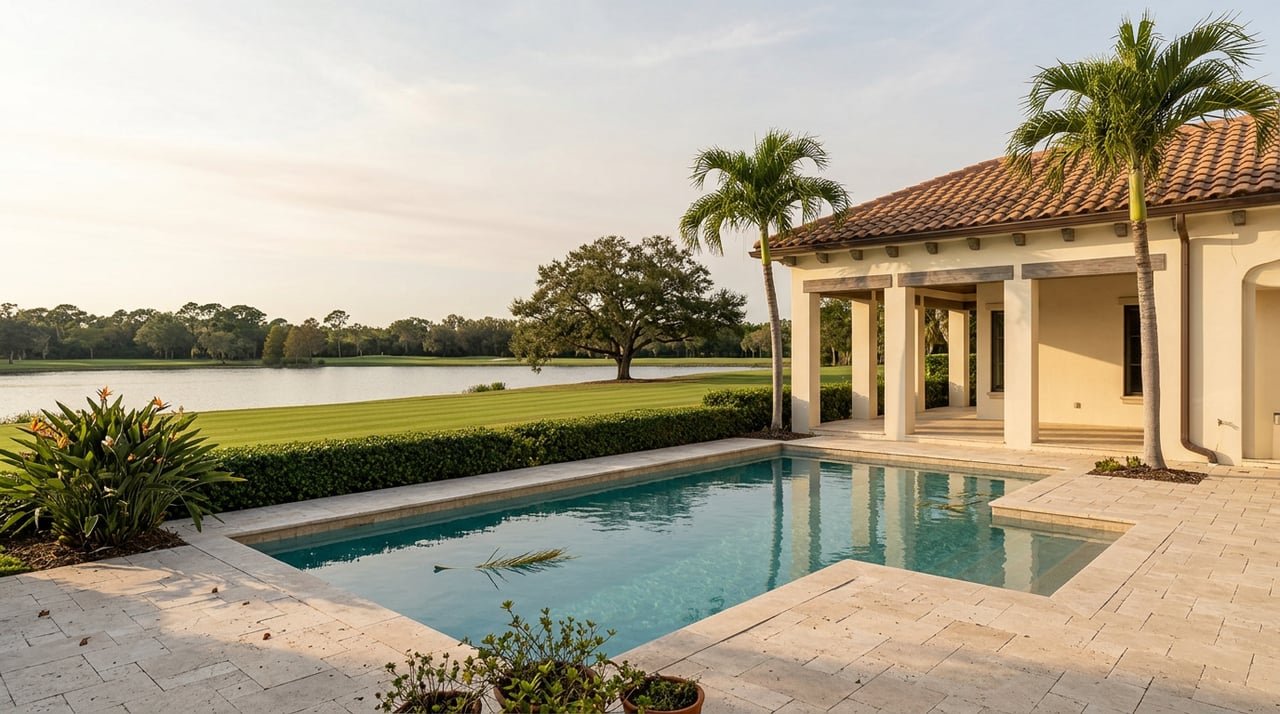
Bridgepointe fills a specific role inside Broken Sound's twenty-eight villages. Alongside villages like Fairway Bend, it is one of the more accessible entry points into the club, offering attached condo living with golf or lake views, a private community pool, one-car garages, and on upper units a private elevator, for less than what a detached single-family home in the community typically commands. That accessibility comes with the same obligation every Broken Sound purchase carries. Anyone buying after October 1, 2017 must apply for club membership and select a category, Sports, New Course, or Old Course, layering a fixed membership cost on top of whatever the unit itself costs.
The story-count exemption interacts with that math in a specific way. Club dues do not change based on a building's height. Membership initiation does not change either. What does change is the shape of a unit's carrying cost curve over time. A buyer in a three-story building elsewhere might reasonably expect a documented reserve ramp-up and a real chance of a state-driven special assessment landing on a fixed timeline. A buyer at Bridgepointe is instead betting on the association's own long-term planning, without a statutory deadline forcing that planning into the open on a public schedule.
Neither position is inherently better. They are different bets, and a buyer comparing entry-level condo options across Broken Sound and the wider Boca market should know which bet they are making before they make it.
Two Questions Worth Asking Before You Assume Too Much
Does the two-story exemption mean Bridgepointe will never face a special assessment? No. It means the assessment, if one comes, will originate from the association's own budget decisions rather than from a state-mandated SIRS finding. The building can still need a new roof or repiping on its own timeline. The exemption changes who sets that timeline, not whether one exists.
Do other lower-priced villages in Broken Sound get the same exemption? It depends entirely on each building's actual story count, not on the village's general reputation as an entry-level option. A buyer should ask about the specific building's height and age for any attached condo product in Broken Sound, rather than assuming all lower-cost villages share Bridgepointe's structure.
The Florida condo story dominating headlines in 2026 is really a story about buildings tall enough to fall under a specific statute. Bridgepointe's fourteen two-story buildings sit outside that story, not because anyone planned it that way in 1993, but because the law that reshaped Florida condo buying decades later drew its line at a height Bridgepointe never reached.
If you are weighing Bridgepointe against another condo option inside or outside Broken Sound and want the actual documents, not just the general rule, Susan Demerer can walk you through what the association can show you and what questions still need direct answers before you write an offer.